Model For Religious Education
At St Peter Claver College, as in all schools and colleges of the Archdiocese of Brisbane, teaching people religion and teaching people to be religious draw upon the Catholic Christian tradition in ways that are mindful of local contexts and the ecumenical and multi-faith realities of contemporary culture.
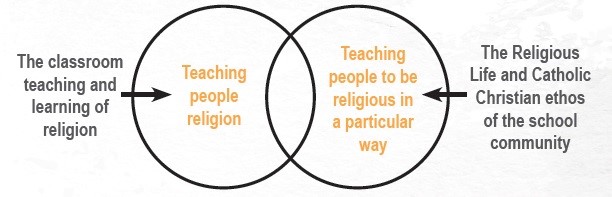
© Brisbane Catholic Education's Model of Religious Education (2008).
At St Peter Claver we intentionally develop our curriculum on the foundations of a Catholic theology and philosophy of curriculum. Learning is inextricably linked with living life to the full. It is personal, relational and communal. Learning is visible, active and interactive to create knowledge and meaning. A student- centred approach that is invitational and dialogical, fostering critical reflective thinking underpins the Religious Education program.
Religious Education Years 7-10
Year 7 Religion
Students explore the foundations of the Christian faith, including the beliefs, values and practices of Christian communities throughout history and today. They learn about the shared origins of Christianity, Judaism and Islam, examine key beliefs such as the Apostles’ Creed and the Ten Commandments and develop an understanding of prayer, scripture and the sacraments.
Year 8 Religion
Students investigate the Christian understanding of God as the Trinity and explore the theme of covenant through the Old Testament. They study the growth of the early Church, significant developments in Church history and the ways Christians live out their faith through prayer, moral decision-making, service and community.
Year 9 Religion
Students examine the concepts of good, evil and sin, and explore how the Church has responded to social and historical challenges. They deepen their understanding of Jesus’ mission, Catholic Social Teaching, Christian beliefs about salvation and the role of scripture, prayer and the sacraments in guiding the lives of believers.
Year 10 Religion
Students investigate how people seek meaning and understanding of God through religious belief, experience, prayer and the world around them. They explore the major world religions, contemporary social and environmental issues, Catholic Social Teaching and the role of faith in responding to the challenges of the modern world.
Religious Education Years 11 and 12
A range of choices from specialised Religious Education Courses are available to meet the needs and interests of learners in their senior secondary years in the Archdiocese of Brisbane. The accredited courses provide opportunities for learners to develop a deeper understanding of the Catholic Christian tradition and an empathetic understanding of world religions, as well as a grasp of the impact of religious teachings on the lives of believers. The approach taken in these courses promotes the religious literacy of students, developing their knowledge, skills and dispositions to interpret and use language confidently in and for faith contexts and the wider society.
Courses offered at St Peter Claver include:
- Study of Religion.
- Religion and Ethics.
Study of Religion General Subject
Students have the opportunity to:
- Engage with an inquiry approach to learn about religions, their central beliefs and practices, and their influence on people, society and culture.
- Develop a range of transferable thinking and processing skills that will help them live and work successfully in the 21st Century.
- Become informed citizens, as religion continues to function as a powerful dimension of human experience.
What are the possible pathways beyond school?
Study of Religion provides a basis for further tertiary studies, vocational education and employment in such fields as anthropology, the arts, education, journalism, politics, psychology, religious studies, sociology and social work.
Religion and Ethics Applied Subject
Students have the opportunity to:
- Explore their personal values and life choices and the ways in which these are related to their beliefs.
- Understand the personal, relational and spiritual perspectives of human experience and reflect on the richness of religious and ethical worldviews.
- Examine how topics such as the meaning of life, spirituality, purpose and destiny, life choices, moral and ethical issues and justice are dealt with in various religious, spiritual and ethical traditions.
What are the possible pathways beyond school?
Religion and Ethics provides a basis for engaging with others in diverse settings, including further education and employment in any field, developing skills and attitudes that contribute to lifelong learning.